Lumen Voice Migration Without Business Disruption
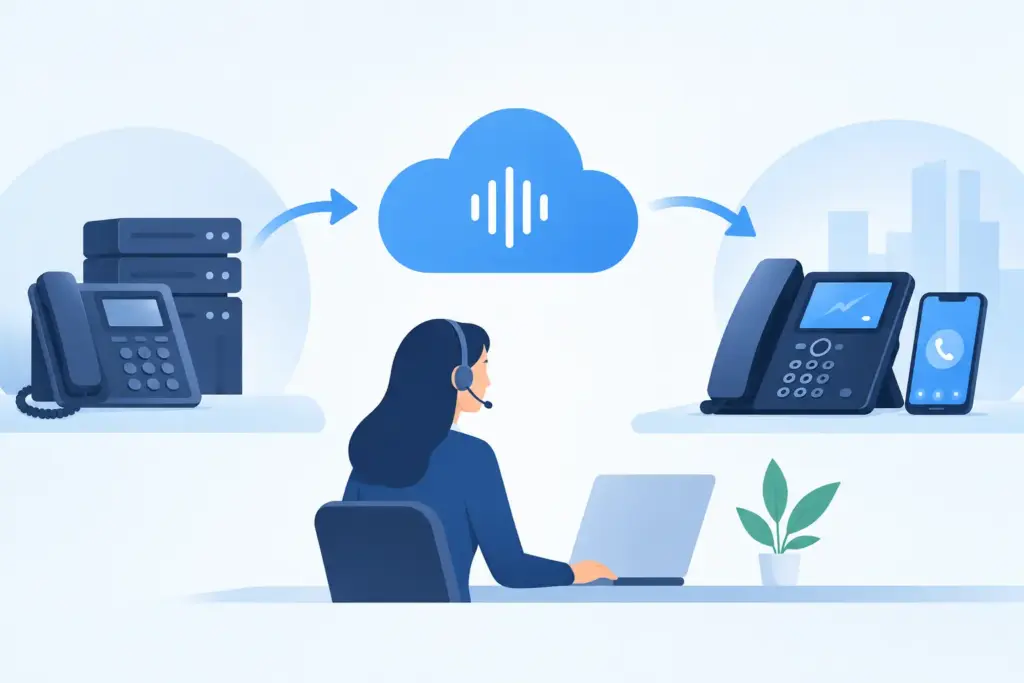
A Lumen Voice migration is not a phone-system replacement project. It is a business continuity event involving carrier routing, phone numbers, emergency services, contact center queues, collaboration workflows, and the calls customers rely on to reach your organization. If any of those elements are treated as an afterthought, the result is familiar: missed calls, confused users, delayed ports, and an IT team working through avoidable escalation tickets.
For enterprises moving from Lumen-based voice services, the objective is clear: modernize the communications environment without asking the business to pause. That requires an engineering-led plan that accounts for every call path before the first number is ported.
Why a Lumen Voice Migration Needs More Than Porting
Number porting is visible, but it is only one layer of a migration. A typical Lumen voice estate may include legacy PRI circuits, analog lines, SIP trunks, local numbers across multiple rate centers, toll-free services, disaster recovery routing, call center platforms, and branch-specific configurations built over years. Many organizations also have undocumented dependencies, such as alarm panels, elevator lines, fax workflows, paging systems, or vendor applications that place outbound calls through a specific trunk.
A migration can fail operationally even when every phone number transfers successfully. If inbound routing does not match established call treatment, if outbound dialing rules change, or if emergency calling locations are incomplete, users experience a disruption regardless of the port status.
The right approach begins by defining the desired operating model. Some organizations are replacing legacy PBXs with cloud voice. Others are retaining existing Cisco or contact center infrastructure while changing carrier connectivity. Many are moving carrier calling into Microsoft Teams while keeping specialized lines and analog services on separate paths. The architecture should follow the business and technical requirements, not a one-size-fits-all UC migration checklist.
Start With a Call-Flow Inventory, Not a Carrier Order
Before selecting a cutover date, document how voice actually moves through the organization. This includes every inbound number, outbound calling pattern, auto attendant, hunt group, queue, failover route, and emergency service location. It also includes the people and systems that own those functions.
An effective inventory separates numbers by business criticality. Main published numbers, customer service queues, executive lines, healthcare or financial service lines, and locations with life-safety obligations deserve different migration controls than low-volume administrative numbers. The objective is not to make the project slower. It is to apply the highest level of validation where failure carries the greatest cost.
Technical teams should also confirm service records early. Port requests are often delayed by mismatches between the carrier record and the information submitted for migration. Billing telephone numbers, account details, authorized contacts, service addresses, and customer service records need to be reconciled before a port is scheduled. This administrative work is unglamorous, but it protects the implementation timeline.
Identify the Exceptions That Standard Plans Miss
Legacy voice environments commonly contain services that cannot simply move to a standard cloud user license. Analog lines, fax machines, security panels, point-of-sale devices, intercoms, overhead paging, and elevator phones may require analog gateways, cellular alternatives, ATA devices, or purpose-built replacements. A careful assessment identifies these endpoints before they become day-of-cutover surprises.
The same is true for contact center operations. Queue logic, skills-based routing, recorded announcements, CRM screen pops, compliance recording, and reporting need to be tested as a complete customer journey. A successful inbound test is not enough if agents cannot transfer calls, supervisors cannot monitor service levels, or recordings are not retained according to policy.
Design for Coexistence and Controlled Cutover
The lowest-risk migration model is usually phased coexistence. Rather than moving every site and number block in one event, organizations can transition in logical groups while the old and new environments operate in parallel. This gives IT teams time to validate live calling behavior, refine user training, and resolve edge cases without placing the entire organization at risk.
During coexistence, routing must be intentional. Inbound calls should reach the correct platform whether a number has already ported or remains on the legacy service. Outbound caller ID must be configured so employees continue presenting familiar business numbers. If a temporary forwarding arrangement is used, teams should understand the potential impact on caller ID, emergency location handling, and call analytics.
Carrier-grade redundancy matters here. A cloud voice design should include diverse carrier paths, monitored SIP connectivity, and predefined failover behavior for critical numbers. For distributed organizations, local survivability may also be necessary when a site loses internet access. The exact design depends on call volume, regulatory obligations, site geography, and acceptable downtime, but the decision should be made before rollout rather than during an outage.
Protect Emergency Calling From Day One
E911 configuration deserves its own workstream. Cloud and hybrid voice environments require accurate mapping between users, devices, network locations, and emergency response addresses. A remote employee, a headquarters conference room, and a warehouse phone may each require different location logic.
Test emergency calling processes with the appropriate internal and public safety procedures. Confirm that notifications reach designated security or facilities teams, that dispatchable locations are accurate, and that moves, adds, and changes have an ownership process. Emergency services are not a checkbox to complete at project close. They are an operational discipline that continues after migration.
Make Microsoft Teams Calling Part of the Architecture
For many enterprises, a Lumen Voice migration is tied to a broader Microsoft Teams strategy. Teams Connect can bring carrier calling directly into the collaboration environment employees already use for chat, meetings, and internal coordination. This can reduce application switching and simplify administration, but Teams should not be treated as an isolated voice island.
The design must account for existing PBXs, branch devices, contact center platforms, executive assistants, reception consoles, and compliance requirements. Direct routing or operator-based connectivity decisions should reflect call volume, geographic needs, existing carrier agreements, and the degree of control required over routing.
Teams also changes the support model. Help desk teams need clear procedures for user provisioning, device troubleshooting, call quality investigation, and escalation. Network teams need visibility into latency, jitter, packet loss, firewall policy, and internet path performance. A successful deployment pairs the user experience with the infrastructure required to sustain low-latency audio under real operating conditions.
Test the Business Experience, Not Just the Dial Tone
A migration test plan should replicate the calls that matter to the business. That means testing more than inbound and outbound calling. Validate transfers between users and queues, voicemail delivery, auto attendant schedules, international dialing, toll-free routing, fax where applicable, call recording, emergency dialing, and failover scenarios.
For customer-facing teams, test the complete path from a caller entering the main number to an agent completing the interaction. If the organization uses CRM integrations, verify that the expected customer context appears. If AI voice automation will answer routine calls, test intent recognition, escalation rules, appointment scheduling, and handoff to live teams. The target is zero hold times for straightforward requests without creating dead ends for customers with complex needs.
User acceptance testing should include people who understand real-world exceptions: receptionists, contact center supervisors, executive support staff, facilities teams, and regional office administrators. They often uncover workflow issues that technical validation alone will not expose.
Establish Cutover Governance and a Recovery Plan
The cutover itself needs a defined command structure. Assign a technical lead, carrier escalation owner, business communications lead, contact center representative, network owner, and executive decision-maker for high-impact issues. Everyone should know the port window, validation sequence, escalation contacts, and criteria for declaring the migration complete.
A recovery plan is equally necessary. Depending on the service design and porting status, rollback may mean restoring prior routes, activating a temporary failover number, forwarding critical calls, or moving users to an alternate calling method. Not every port can be reversed instantly, so the practical goal is to maintain customer access while corrective action is underway.
Communicate with users in practical terms. Tell them what changes, what stays familiar, how to sign in, which devices are supported, and where to get immediate help. Avoid sending a generic announcement minutes before cutover. Focused training before each rollout wave reduces avoidable support demand and helps employees adopt new calling workflows quickly.
Turn Migration Into a Better Operating Model
The value of a voice migration should extend beyond replacing an invoice. A modern environment can consolidate fragmented carriers and UC tools, centralize administration, improve visibility into call quality, and connect voice data to collaboration and customer-service workflows. It can also create a foundation for AI voice agents that answer repetitive calls, qualify requests, schedule services, and route customers without forcing them into a queue.
UCC Networks approaches these programs as communications architecture projects, combining carrier-grade connectivity, phased deployment engineering, Microsoft Teams integration, and direct operational support. The right partner should be able to explain not only how numbers will port, but how your organization will keep answering calls at every stage.
A well-planned Lumen Voice migration gives IT leaders a rare opportunity: retire aging telecom complexity while making it easier for employees and customers to reach the right person, service, or automated answer on the first attempt.