AI Phone Agent for Inbound Calls That Performs
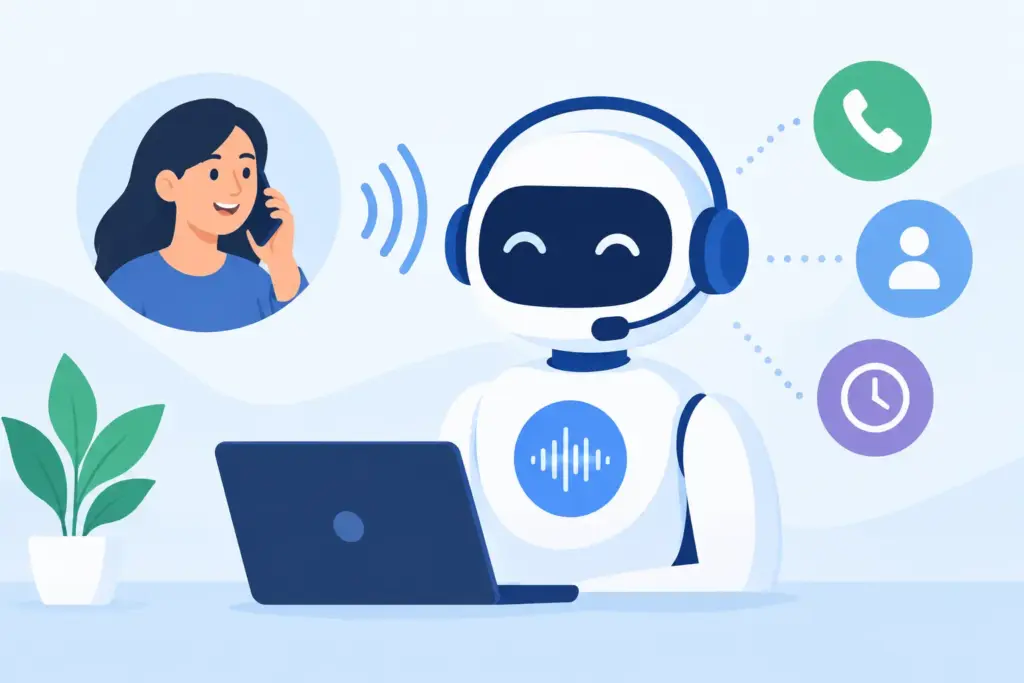
A missed call is rarely just a missed call. It can be an unbooked service appointment, an unresolved patient question, a delayed order, or a customer who decides the wait is not worth it. An AI phone agent for inbound calls gives enterprises a practical way to answer every call immediately, understand the caller’s purpose, and move the request into the right workflow without adding another layer of manual triage.
The technology matters, but the operating model matters more. A voice agent should not be treated as a novelty greeting at the edge of the contact center. It should function as a dependable part of the communications environment: connected to carrier-grade voice infrastructure, governed by clear escalation rules, integrated with business systems, and designed around the calls customers actually make.
What an AI phone agent for inbound calls should do
At a basic level, an inbound voice agent answers, listens, speaks naturally, and either resolves the request or directs it to the appropriate person, queue, or system. For enterprise deployment, that definition needs to go further. The agent must recognize intent despite accents, interruptions, background noise, and incomplete information. It must preserve context when a live transfer is required. And it must operate reliably when call volumes spike or one carrier path experiences an issue.
A well-designed agent can handle repetitive, high-frequency requests such as appointment scheduling, order status, location information, account verification, basic troubleshooting, payment reminders, and lead qualification. It can collect structured information before routing a complex issue to an employee, reducing the time agents spend asking for details that should already be available.
Consider a multi-location service organization receiving hundreds of calls each day. Rather than placing callers into a generic queue, the voice agent can identify the location, determine whether the caller needs a new appointment, reschedule, billing assistance, or emergency support, and take the next action. A scheduling request can be completed during the call. An urgent service issue can be escalated to an on-call team. A billing question can arrive with a concise interaction summary and the relevant account details.
That is how zero hold times become an operational outcome rather than a marketing phrase.
Why voice infrastructure determines the customer experience
Many AI deployments begin with the model and end with a weak telephony connection. That creates avoidable risk. If audio is delayed, calls drop during transfers, caller ID behavior is inconsistent, or an agent cannot access the correct business context, the experience fails regardless of how natural the voice sounds.
An enterprise AI phone agent needs low-latency audio paths, dependable SIP connectivity, intelligent call routing, and redundancy across carrier options. It also needs a clear plan for failover. If a primary path is unavailable, calls should continue through an alternate route without forcing customers to redial or leaving teams blind to the event.
This is especially relevant for organizations consolidating legacy PBXs, contact center platforms, branch offices, and Microsoft Teams calling. The voice agent must fit into the environment already supporting employees and customers. It should route to Teams users when needed, interact with contact center queues where those remain the right destination, and maintain consistent dial-plan and number-management policies across locations.
Carrier-grade infrastructure also creates better visibility. IT and contact center leaders need to see answer rates, transfer patterns, containment, abandoned calls, call quality, peak demand periods, and failure conditions. Without that operational data, an organization cannot distinguish a useful automation from an attractive demo.
Design for resolution, not deflection
The wrong deployment objective is simply to keep callers away from employees. That approach often produces circular conversations, dead ends, and customers repeatedly asking for a person. The better objective is resolution at the lowest-friction point, with a fast and informed human handoff when automation is not appropriate.
Start by analyzing the inbound call reasons that create the most queue pressure. Some will be clear candidates for automation because the process is structured and the required data is available. Others may need human judgment, exception handling, or empathy that should not be forced into a rigid script.
A useful initial design usually separates calls into three paths. The first is self-service resolution, such as confirming an appointment or answering a policy question. The second is assisted completion, where the agent gathers information and prepares the interaction for an employee. The third is immediate escalation, used for sensitive, urgent, high-value, or regulated scenarios.
The handoff is where many deployments lose value. When a caller asks for a person, the system should transfer them with intent, collected details, and a concise summary. The employee should not have to restart the conversation with, “How can I help you?” after the caller has already explained the issue twice.
Build the agent around real conversational conditions
Phone conversations are not web forms. Callers change their minds, use shorthand, interrupt prompts, provide partial answers, and ask unrelated questions. The agent needs to manage ambiguity without pretending to understand something it does not.
That means defining confirmation rules for critical information, including names, phone numbers, account identifiers, dates, addresses, and appointment times. It means setting a threshold for when the agent should ask a clarifying question versus transferring to a live team member. It also means allowing callers to request a person at any point.
Voice design should be direct. Long introductions and excessive disclosures create friction. A concise greeting, clear identification of the organization, and an immediate invitation to state the reason for the call usually perform better than an extended menu structure.
Integration is the difference between answering and acting
An AI agent that can only talk can reduce basic call volume. An agent that can securely read and update approved systems can complete work.
For example, a voice agent may need to check appointment availability, create a service ticket, locate an order, update contact preferences, qualify a lead in a CRM, or send a confirmation through SMS. Each action requires controlled integration with the appropriate application and a defined policy for what the agent can view, change, and communicate.
This is not an argument for connecting every system on day one. Broad automation without governance can create unnecessary exposure and complicated failure modes. Start with workflows that have a clear business owner, stable process logic, measurable value, and safe fallback options. Then expand based on call data and operational results.
For organizations using Microsoft Teams, Cisco, Zoom, Genesys, 8x8, or a mixed legacy environment, integration planning should include presence, routing rules, identity, number ownership, and transfer behavior. The goal is not to replace every platform automatically. It is to create a coordinated call path that respects existing investments while removing the gaps that cause delays and duplicated work.
Security, compliance, and control cannot be add-ons
Inbound calls often contain personal information, account data, payment details, and sensitive service requests. Enterprise teams should decide in advance which information the agent may collect, whether calls are recorded or transcribed, how data is retained, and who can access interaction records.
Governance should also cover authentication. A caller’s phone number alone may not be enough to authorize account changes or disclose protected information. The agent may need to use verification questions, one-time codes, or a transfer to a specialized team before taking an action.
Administrators need centralized controls for prompts, knowledge sources, routing policies, approved actions, reporting, and escalation paths. Changes should be tested against real call scenarios before broad release. This is particularly critical when an organization operates across multiple regions, business units, or regulated lines of business.
Measure the operational impact
Containment rate is useful, but it is not sufficient. A high containment rate can hide poor experiences if callers receive incomplete answers or give up. Evaluate the system against service-level performance and business outcomes.
Track how quickly calls are answered, how often callers reach resolution, transfer rates by intent, abandonment rates, repeat calls, average handling time after transfer, and customer sentiment where available. Review failed or escalated interactions regularly. Those calls show where the knowledge base, integrations, or conversation design needs adjustment.
Cost should be evaluated in context as well. The right comparison is not only the cost per automated interaction. It is the cost of queue time, missed opportunities, after-hours staffing, agent burnout, inconsistent service across locations, and outages caused by fragmented communications architecture.
UCC Networks approaches AI voice automation as a communications engineering discipline, pairing always-on voice agents with the carrier connectivity, routing design, and support model needed for continuous uptime. That distinction is material when the phone line remains a primary customer channel.
The most productive next step is to select one high-volume inbound call journey and map it from ring to resolution. Identify the systems involved, the decisions that require a person, the data that must be verified, and the recovery path when something goes wrong. A focused deployment with clear controls will reveal where an AI phone agent can create faster service without compromising the experience your customers expect.