Is Microsoft Teams Operator Connect Worth It?
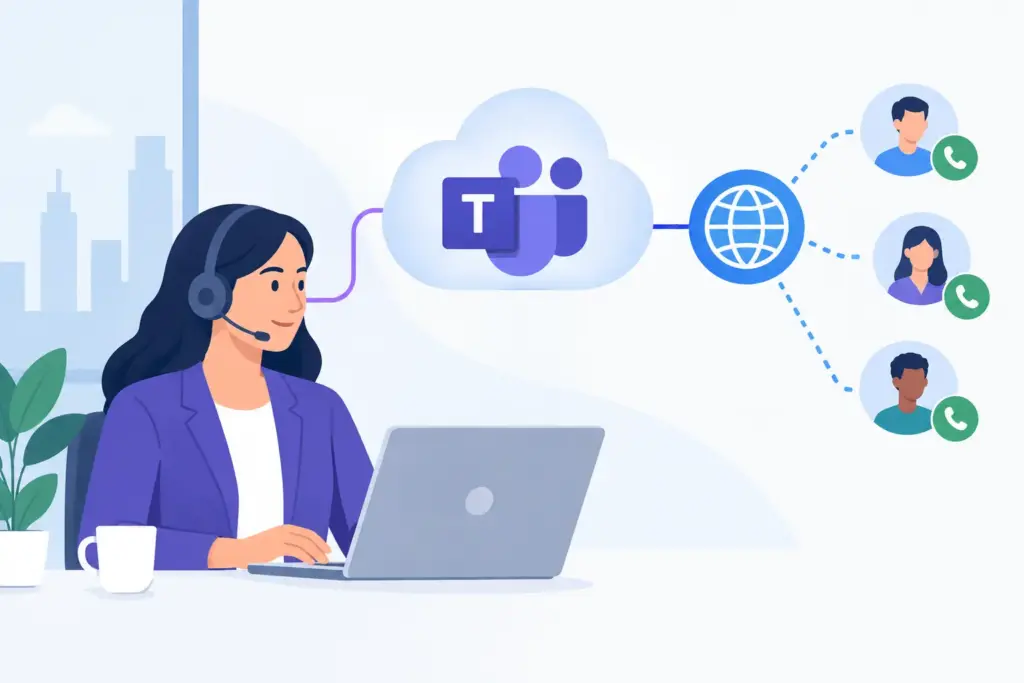
A Microsoft Teams Operator Connect review should start with the operational question that matters most: can your organization modernize Teams calling without introducing another fragile voice layer? Operator Connect gives enterprises a Microsoft-supported path to bring PSTN calling into Teams through approved carriers. For many organizations, it is a meaningful improvement over disconnected phone systems and manual carrier administration. It is not, however, a universal replacement for every voice architecture.
The right decision depends on call volume, existing carrier contracts, geographic footprint, compliance needs, survivability requirements, and how much control IT needs over routing. Organizations with straightforward Teams calling requirements may find Operator Connect efficient and predictable. Enterprises with complex locations, contact centers, legacy PBXs, or strict continuity requirements may need a more engineered model.
What Operator Connect Actually Changes
Operator Connect connects a certified carrier's PSTN services directly to Microsoft Teams. Rather than deploying and managing session border controllers for every calling deployment, IT can select a participating carrier within the Teams Admin Center, assign numbers, and provision users through an integrated workflow.
That reduction in deployment overhead is the central appeal. The carrier remains responsible for delivering voice connectivity, while Microsoft provides the Teams calling experience and administrative framework. End users place and receive calls from the Teams client across desktop, mobile, and certified devices, without changing the collaboration interface they already use.
For IT teams consolidating fragmented voice environments, this can remove several common friction points: separate phone clients, inconsistent user provisioning, decentralized number management, and a support model where Microsoft and the carrier operate without clear boundaries.
Operator Connect is not the same as Microsoft Calling Plans. Calling Plans are purchased from Microsoft and can be appropriate for smaller or less complex deployments. Operator Connect preserves carrier selection, which can be valuable when an enterprise needs specific coverage, negotiated commercial terms, number-porting support, or a carrier with established regional operations.
Microsoft Teams Operator Connect Review: Core Strengths
Operator Connect is strongest when Teams is already the center of employee collaboration and the organization wants a faster path to enterprise calling. The model keeps voice within the Teams experience while reducing much of the infrastructure burden associated with traditional Direct Routing.
Faster administration for standard calling needs
Provisioning is materially simpler than a fully self-managed Direct Routing environment. Administrators can assign telephone numbers and calling policies from a familiar Microsoft management plane, while carrier connectivity is delivered through the operator's managed infrastructure.
This matters when IT teams support hundreds or thousands of knowledge workers across distributed offices. A standard operating model lowers the number of moving parts involved in onboarding, offboarding, number assignment, and routine service changes.
Carrier choice without an SBC project
Operator Connect creates a middle path between Microsoft-provided calling and a fully customized Direct Routing deployment. Enterprises can choose from participating carriers rather than accepting a single calling-plan model, but they do not necessarily need to deploy, operate, and monitor their own SBC estate.
That can accelerate modernization, particularly after an acquisition, office consolidation, or remote-work expansion. It also shifts more carrier-network responsibility to a provider that is already designed to operate voice services at scale.
A cleaner end-user experience
Employees want one place to chat, meet, collaborate, and call. Teams calling reduces application switching and simplifies adoption, especially when a workforce has already standardized on Teams for internal communication.
The benefit is not just convenience. When business calling is embedded in the same interface used for presence and collaboration, users can see availability, transfer calls more effectively, and preserve communication context. For customer-facing teams, that can improve response speed without requiring another desktop client.
Better fit for managed service operations
A qualified carrier can provide number porting, service activation, voice quality troubleshooting, and support escalation. This is especially useful for organizations that lack internal telecom specialists or need to reduce the operational load on an already stretched infrastructure team.
The quality of this experience depends heavily on the provider. Operator Connect simplifies the technical model, but it does not eliminate the need for carrier-grade network design, clear support ownership, and disciplined migration planning.
Where Operator Connect Has Limits
The easiest Teams calling path is not always the most capable one. Operator Connect is intentionally standardized, and that standardization can become a constraint when voice is deeply tied to business processes.
Less control over complex routing
Enterprises with advanced dial plans, custom call routing, analog device dependencies, survivability requirements, or specialized integrations may find Operator Connect too restrictive. Direct Routing generally provides more granular control because the organization or its managed provider controls the SBC layer and can design routing around specific sites, carriers, failover policies, and applications.
Consider a manufacturer with plants that need local emergency calling, resilient connectivity during a WAN outage, paging systems, and integrations with an existing Cisco environment. That organization may need more than standardized Teams PSTN access. The architecture must account for local survivability and operational continuity, not just user licensing.
Carrier availability and commercial variation
Operator Connect availability differs by carrier and region. A provider that serves a primary US office well may not offer equivalent coverage, number portability, or support capabilities in every country where the enterprise operates.
Costs also vary. Per-user pricing may look attractive at first, but the full comparison should include porting, emergency services, international usage, toll-free numbers, contact center requirements, migration work, support tiers, and any remaining legacy contracts. A low monthly rate is not necessarily a low total cost of ownership.
Contact center and workflow integration still require design
Operator Connect enables Teams PSTN calling. It does not automatically solve customer experience challenges such as long queues, inconsistent routing, after-hours coverage, CRM integration, recording policies, analytics, or automated service.
If customer calls are central to revenue or service delivery, assess Operator Connect alongside the broader contact center and automation design. AI voice agents, for example, can answer routine requests, schedule appointments, qualify callers, and route escalations with zero hold times. The carrier connection is foundational, but it is only one component of the customer communication workflow.
Operator Connect vs. Direct Routing
The practical choice is less about which product is "better" and more about where the enterprise needs control.
Operator Connect is usually a strong fit when Teams calling requirements are conventional, the business wants a managed carrier relationship, and deployment speed matters more than deep telephony customization. It works well for knowledge-worker calling, distributed office users, and organizations replacing basic business phone systems.
Direct Routing is generally the better fit when the environment includes multiple carriers, complex dial plans, legacy voice systems, specialized devices, nonstandard integrations, geographic redundancy, or stringent business continuity requirements. It requires more engineering discipline, but it can support a far more tailored architecture.
Some enterprises use both. Operator Connect may serve general Teams users, while Direct Routing supports critical locations, contact center workflows, specialized routing, or international carrier requirements. A hybrid strategy can reduce complexity without forcing every business unit into the same voice model.
What to Validate Before You Commit
A productive evaluation begins with traffic and dependency mapping, not a license quote. Identify every number range, call queue, auto attendant, emergency-calling requirement, carrier contract, analog endpoint, contact center dependency, and site-specific failover need.
Then test the operating model. Who provisions numbers? Who owns porting? What is the escalation path during a voice-quality incident? How are outages communicated? What happens if the primary WAN connection fails? Can the provider show carrier redundancy, active network monitoring, and measurable response commitments?
Voice quality deserves equal scrutiny. Teams calling depends on the full path from endpoint to network edge to carrier interconnection. A strong provider should evaluate bandwidth, QoS policies, firewall configuration, local network conditions, and site readiness before cutover. Poor audio is rarely solved by changing a user setting after deployment.
Migration planning is the final differentiator. Number porting, pilot groups, emergency address validation, user communications, call-flow testing, and rollback procedures should be planned as one coordinated program. A zero-downtime migration is an engineering outcome, not a marketing promise.
The Bottom Line for Enterprise Teams Calling
Operator Connect is a credible, efficient option for organizations that want carrier calling inside Microsoft Teams without building and operating a full Direct Routing environment. Its value comes from reduced administrative friction, carrier choice, and a more unified employee experience.
But standardization has boundaries. When communications are tied to contact center performance, multi-site resiliency, legacy telephony, global routing, or critical customer operations, the decision requires architecture-level analysis. UCC Networks approaches this as a communications design question: align Teams calling, carrier connectivity, redundancy, migration execution, and automation around the way the business actually operates.
Before selecting a model, bring your carrier contracts, site inventory, call flows, and uptime requirements into one technical review. The right Teams calling deployment should make daily work simpler while preserving the control and continuity your operation cannot afford to lose.