Voice AI Appointment Scheduling Without Hold Times
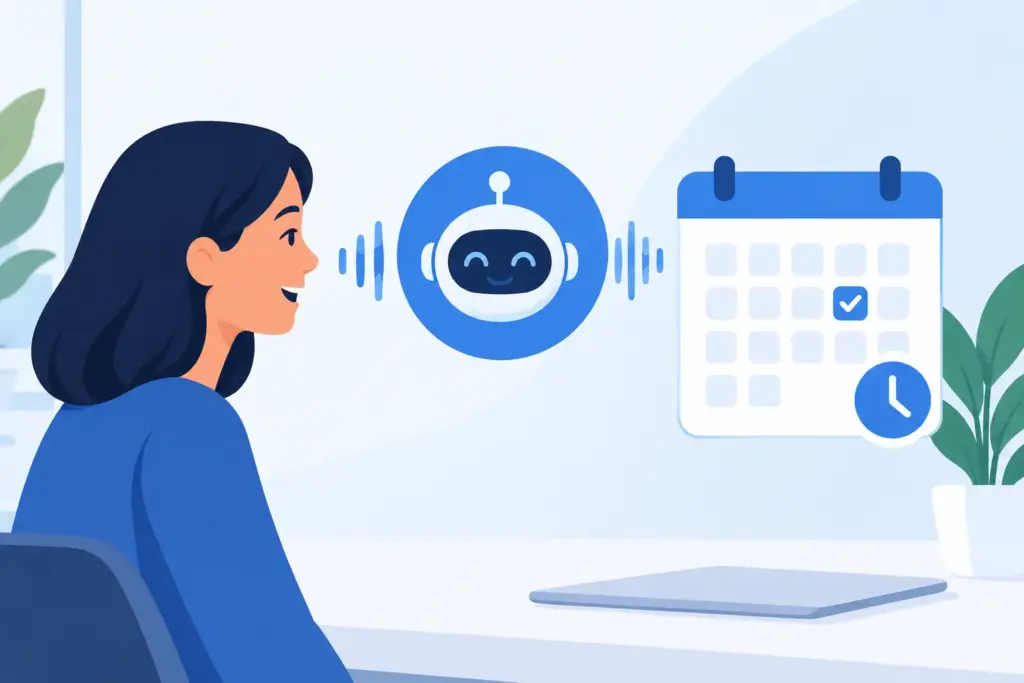
A missed booking call is rarely just a missed booking call. It can mean an unfilled service slot, a delayed care interaction, an abandoned sales inquiry, or a customer who decides the wait is not worth it. Voice AI appointment scheduling changes that equation by answering every call, understanding the request, and completing the scheduling workflow without placing callers into a queue.
For enterprises with distributed locations, high inbound call volume, or limited scheduling teams, this is not a novelty feature. It is operational infrastructure. The value comes from connecting natural voice conversations to the systems that determine availability, customer eligibility, staff calendars, locations, and follow-up actions.
Why scheduling calls still create operational drag
Scheduling appears straightforward until an organization operates across multiple sites, service lines, time zones, and business applications. A caller may need to book a repair, reschedule an appointment, confirm a location, ask whether a specialist is available, or speak to a person about an exception. Traditional phone trees cannot reliably manage that context. Human agents can, but only when they are available.
The result is a familiar pattern: customers wait, agents repeat basic questions, and valuable staff time is spent on transactions that follow predictable rules. Overflow calls may be sent to a contact center that has no real-time visibility into the scheduling platform. After-hours requests become voicemail. Manual callbacks create another queue.
The problem is not simply call volume. It is the gap between the phone system and the systems of record that employees use to run the business. A voice agent that only captures a message moves the work downstream. A voice agent that can verify intent, locate availability, create or modify an appointment, and document the interaction removes work from the queue entirely.
What voice AI appointment scheduling must do
Enterprise-grade voice AI appointment scheduling should operate as a conversational front end to an established scheduling process, not as a separate, disconnected booking tool. It must recognize natural speech, manage interruptions, ask clarifying questions, and respond accurately when a caller changes direction mid-conversation.
Consider a caller who says, “I need to move my appointment in Dallas to next week, preferably after three.” The system needs to identify the caller, determine which appointment is being referenced, apply location and service rules, search eligible availability, confirm the selected time, and trigger the required confirmation workflow. If the request cannot be completed, it should transfer the interaction with context intact.
That requires more than speech recognition. The underlying design needs low-latency audio, reliable telephony, workflow orchestration, identity verification rules, integrations, and carefully defined escalation paths. Carrier-grade infrastructure matters because a highly capable AI workflow has little value if calls fail, experience poor audio quality, or cannot transfer reliably during a peak period.
A practical live-call workflow
A well-designed interaction feels direct rather than scripted:
Caller: “Can I schedule an installation at our Phoenix office next Tuesday?”
Voice agent: “I can help with that. Is this for a new service installation or an equipment replacement?”
Caller: “New service.”
Voice agent: “I have Tuesday availability from 10 to noon or 1 to 3. Which window works for your team?”
The workflow behind that short exchange can validate the service address, check technician territory, apply lead-time rules, reserve the time window, create a work order, and send a confirmation by SMS or email. If the caller asks for a nonstandard configuration, the agent can route the call to a qualified specialist rather than forcing the caller to start over.
Integration determines the business outcome
The strongest scheduling deployments begin with the systems already in use. Depending on the organization, that may include a CRM, field service platform, electronic health record, calendar system, contact center application, or purpose-built scheduling database. The AI layer needs governed access to the right data and actions, with clear boundaries around what it may read, update, or escalate.
Integration also changes the employee experience. When a transfer is necessary, agents should receive the caller’s intent, collected details, prior appointment information, and the reason automation could not complete the request. That avoids the frustrating handoff where a customer repeats everything to a second person.
For organizations using Microsoft Teams, Cisco, Zoom, Genesys, 8x8, or a legacy PBX environment, the voice layer must fit the existing communications architecture. A standalone AI tool can create another management console, another routing rule set, and another point of failure. A unified communications approach centralizes call routing, numbers, analytics, policy, and operational ownership.
UCC Networks designs AI Connect deployments around this principle: conversational voice automation should work within the enterprise voice environment, backed by carrier connectivity, intelligent routing, and engineering support. The objective is not to replace every human conversation. It is to automate the high-volume, rules-based interactions that create avoidable wait times while preserving a fast path to qualified staff.
Where automation creates the most value
Appointment scheduling is a strong first use case because the demand is measurable and the workflows are often repeatable. Service organizations can schedule installations, repairs, inspections, and dispatch windows. Healthcare organizations can manage eligible appointment types, cancellations, reminders, and routing to clinical staff. Multi-location businesses can direct customers to the right branch and reserve available service times.
The value increases when the voice agent handles the complete appointment lifecycle. Booking is only one step. Rescheduling, canceling, confirming, notifying staff, and filling openings from a waitlist can have an equally significant impact on capacity utilization.
That said, not every scheduling workflow should be fully automated on day one. Complex clinical cases, high-value enterprise sales appointments, exception-heavy field service work, and conversations involving sensitive account changes may require tighter guardrails or immediate human involvement. The correct design is based on intent categories, risk, system readiness, and the cost of an incorrect action.
Designing for control, not just convenience
A successful deployment requires operational discipline. Teams should define which appointment types the agent can schedule, what verification is required, which data sources are authoritative, and when an interaction must be escalated. Those rules should be reviewed by the business owners who understand scheduling constraints, not only by IT.
Security and compliance must also be built into the call flow. Enterprises need controls for authentication, data minimization, consent language where applicable, recording policies, retention, auditability, and role-based access. Requirements differ by industry and state, so generic automation settings are not enough.
Reliability deserves the same attention. If scheduling is a customer-facing revenue or service channel, the environment should include multi-carrier redundancy, monitored call paths, tested failover procedures, and clear support ownership. Continuous uptime is the standard customers expect, particularly when automated service becomes the first point of contact.
Measure outcomes beyond containment rate
Call containment is useful, but it does not tell the whole story. A system can contain calls while creating incorrect bookings, unnecessary transfers, or a poor caller experience. Enterprise teams should measure outcomes that tie directly to operations: completed appointments, abandoned calls, average time to book, transfer rate by intent, booking accuracy, no-show rate, after-hours capture, and cost per completed interaction.
Review call transcripts and exception paths regularly. The most valuable improvements often come from the moments where the voice agent almost succeeded but lacked a policy, integration field, or escalation rule. Those findings can refine both the AI workflow and the business process behind it.
Voice AI appointment scheduling works best when treated as a communications and workflow modernization initiative, not a point solution. Build it on reliable voice infrastructure, connect it to the systems that govern availability, and give it clear authority to act. The result is a scheduling operation that remains available when demand spikes, offices close, and customers need an answer now.